

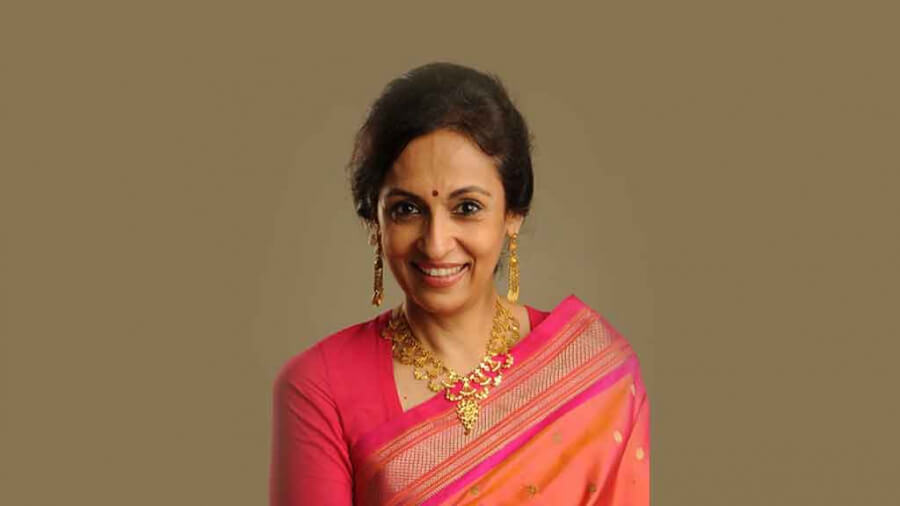
Ms. Swaroop Sampat, in her short stint in the TV and film industry, has worked in very well-known TV serials such as “Yeh jo hai zindagi” and movies such as “Ki and Ka.”. She was also crowned Miss India in 1979, and this epitome of beauty with brains has also done her Ph.D. in Education from the University of Worcester, U.K., with a doctoral thesis on drama to enhance life skills in children with learning disabilities. She puts her learnings into practice by working with various government and non-government schools and imparting her valuable knowledge of life skills amongst the lowest strata of society, thereby making a huge impact on gender diversity and its upliftment, and is working passionately and tirelessly towards the cause.
On the occasion of International Women’s Day, we got a chance to speak to her. Given below is a summary of what we discussed with her:
“There were some unscrupulous characters during my short span in the film industry who propositioned me inappropriately, and I was lucky enough to say no and assert myself; however, I am not sure whether every girl is able to do the same.“
You are a Ph.D. in Education from the University of Worcester with a doctoral thesis on drama to enhance life skills in children with learning disabilities. How do you think your valuable knowledge and skill can facilitate sensitizing the industry towards diversity in individuals and making it inclusive and respectful?
So life skills are the main thing. Life skills entail acquiring a set of skills to overcome and face difficulties. It helps you become resilient in critical thinking, etc. Everyone has problems, and life skills teach you how to handle problems better and empower everybody, irrespective of gender. From the perspective of sexual harassment, one needs to understand that sexual harassment works both ways, and it is also necessary to understand the mindset of the abuser, who himself may have been a victim of abuse, undergoing some emotional distress due to societal or family pressures, or even a chemical imbalance in his brain. In order to curb such incidents, one needs to analyze the mindset and thought process of the abuser, which will facilitate finding a long-term solution. Since we are all humans and are filled with emotions, we need to understand and channel them properly, and life skills also teach you just that by streamlining your anger and ensuring that whatever your emotions are, you display them appropriately.
In my experience of working with Kasturba Gandhi Bal Vikas Kendra (which is a government institution spread across all states of India with the purpose of educating girl children belonging to the socially and backward strata of society), where I teach children to manage emotions from a very young age, including impulse control, I have understood that one way of doing so is by asking them to conceptualize a situation even before it has happened. For example, if a stranger offers a lift on a secluded highway where you are stranded, what would you do? This prepares them for a situation that they may never even be in; however, this becomes the key, as I have found that many girls freeze during an attack of this nature, whereas in such situations, it is important that they assert themselves by saying a resounding no and also be prepared to tackle the situation in case they ever have to face it. I also feel that such skills should be taught at a younger age in schools so that they can be applied in colleges and even later in life. This will ensure prevention and also bring about mutual respect for one another’s personal space.
After winning Miss India in 1979, you were successful in both the film and TV industries. What was the difference (if any) in the treatment of actors and staff in both industries? Did you ever feel that female actors and staff were treated differently? If yes, has the treatment changed in any manner over the years?
Well, very honestly, during my time and speaking from an entirely personal perspective, women were treated as commodities, and although everybody is not the same, there were some unscrupulous characters during my short span in the film industry who propositioned me inappropriately, and I was lucky enough to say no and assert myself; however, I am not sure whether every girl is able to do the same. The trend I noticed was that people from higher or authoritative positions, e.g., a few producers, would engage in such behavior and always thought they could engage and get away with it as they were in powerful decision-making positions, where propositioning a girl to sleep with him in order to acquire a role was quite common, and a lot of girls, in their desperation for getting work due to their financial and other problems at home, gave in and were left with no alternative. This is a sad reality. Around 20 to 30 years ago, during my time, the TV industry had a theater base and had started to evolve, and there I did not face any problems. I was treated as an equal by all my colleagues during my time on TV when I was doing the serial “Yeh jo hai zindagi.”.
Currently, as I am not really active in either of the industries, I do not know how it is. But during my interaction with people who were in lower positions then (such as makeup men, assistant directors, and other DOP staff) who have now attained a higher position, they were very responsible and had not taken a cue regarding inappropriate and sexist behaviour from their higher-ups, which is refreshing to see and definitely gives a ray of hope for the generations to come.
“Support staff also gets harassed, and its not gender-specific, and sexual harassment is majorly a function of abuse of power, not just from the perspective of it being industry-specific, but a commoner raping a fully draped village woman is abusing what he thinks as power that he possesses as being a man and of a superior gender.”
With various celebrities such as Swara Bhaskar, Tisca Chopra, Kangana Ranaut, and many others talking about sexual harassment more openly now, do you think sexual harassment in the industry is common, not just among celebrities but also among support staff?
Yes, support staff also get harassed, and its not gender-specific, and sexual harassment is primarily a function of abuse of power, not just from the perspective of being industry-specific, but a commoner raping a fully draped village woman is abusing what he thinks is the power that he possesses as a man and of a superior gender.
Do you think there is awareness in the industry about the law on sexual harassment at work?
No, I don’t think there is much awareness about the law on sexual harassment and the implications of engaging in such behavior, which is evident given the various recent news stories we hear day in and day out.
What kind of contracts do celebrities have to enter into with the producer? Is there anything that restricts them from reaching out to a court?
Not that I am aware of.
Why do you think celebrities and other staff members don’t report?
Firstly, girls who themselves voluntarily agree to sexual advances for work are part of the act and therefore find it difficult to report it against a person with whom they are themselves engaging in such acts. Another difficulty is that they will have to come back eventually to the same person for work, and for them, sleeping with the harasser becomes a small price to pay. Others who have been propositioned are scared of the possible outcome that an influential person like that may have on her career: losing out on work in the future, being typecast in the industry, and being treated like a “paraya” (stranger) in the industry.
Are you aware of the presence of an internal committee to handle complaints of sexual harassment at any production house?
I am not aware of this one either.
“Others who have been propositioned are scared of the possible outcome that an influential person like that may have on her career: losing out on work in the future, being typecast in the industry, and being treated like a “paraya” (stranger) in the industry.”
Since you have a remarkable experience teaching underprivileged girl children from the lowest strata of society, do you think there have been any changes for the better in giving education opportunities to girl children, and do you see a discrimination-free future for working individuals?
Yes, I do see a good future, as the government is working towards it, although I am not part of any government, and there are many NGOS and good people working towards upliftment. Some initiatives, according to me, worth highlighting are Kasturba Gandhi Bal Vikas Kendras (KGBVs), where only until 8th grade, after which the girls studying there were married off, the girls are planning to have classes till 12th grade. Apart from this, various initiatives by the government have been taken to provide cycles to the girl children, enabling them to travel to school and also opening more schools near their homes, etc., to name a few.
In my personal experience of teaching life skills at the grass-roots level of various schools and NGOS for the underprivileged, which helped inculcating the idea of diversity and inclusive behavior across genders, life skills were taught to both genders in the schools, wherein basic things like similar activities such as stitching and carpentry were taught to both genders. According to me, the idea of inclusiveness, if provided at the elementary level, will certainly create a discrimination-free environment in the long term for working individuals.
On this Women’s Day, would you like to give any message to the working individuals of our country?
I would just like to quote a line from the poem by my favourite poet, Faiz Ahmed Faiz: “Bol ke lab azaad hai tere.”.
Truly inspirational. The lady is not only beauty with brains, but has what is the most missing component today, i.e. a heart. Ladies like these taking the society forward in their own way, without making a fuss is a boon. May she continue her soul work and you as POSH reach greater heights. Best wishes, Pezan.