

Description
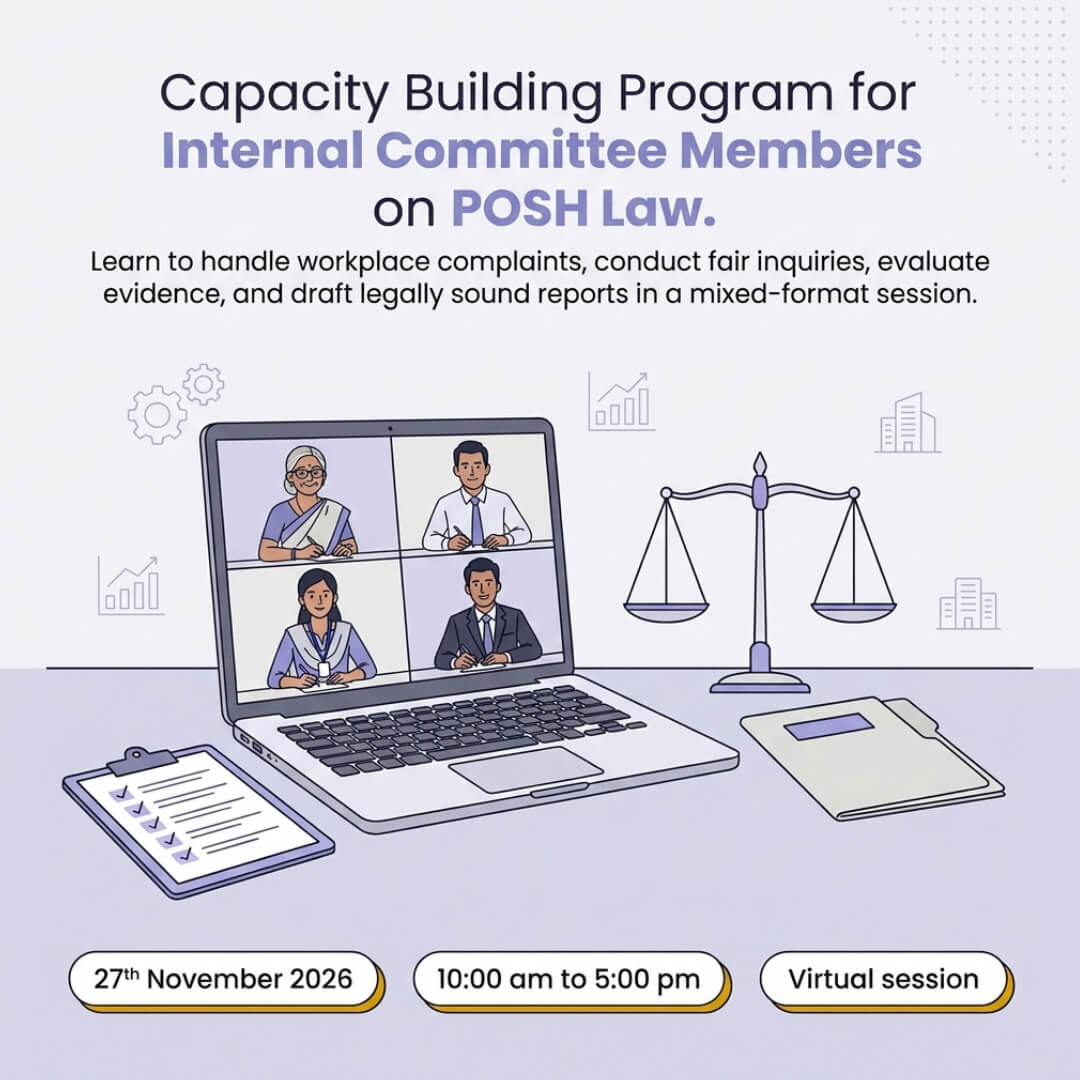
Capacity Building Program for Internal Committee Members on POSH Law
- 27th November 2026
- 10:00 am – 5:00 pm
- Virtual session
- Average rating: 4.71
Programme Fee – ₹ 7,500 + taxes
A trained IC is the guardian of fairness at work
Fair, not just formal
Skills, not just law
Trust in the process
Four things you’ll be able to do after this day
Handle complaints with confidence
Conduct fair inquiries
Evaluate evidence
Draft legally sound reports
Your day, hour by hour
- What sexual harassment is, including the finer nuances
- The key factors behind harassment at work, and what an IC must keep in mind
- Current trends: what kinds of complaints are coming up today
- Concerns from social media and the challenges they bring
- The fine line between a hostile work environment and “fun”
- The fine line between quid pro quo and normal managerial responsibilities
- What “workplace” means today, and what Courts are saying
- Who can file a complaint? Does the POCSO Law have a role?
- Can transgender persons complain? What role does the Transgender Persons Law play?
- Is it legal to accept complaints from men, and what process applies?
- Against whom can you receive complaints? What if the respondent is an outsider?
- An employee of another organisation (on deputation or contract) complains against someone in yours
- Tracking respondents in online instances, and handling multiple complainants and respondents
- Your powers as a civil court, and your responsibilities under law
- Principles of natural justice
- Conciliation vs. inquiry: the to-dos and trends
- Types of evidence and how to use them
- Interviewing witnesses: the why and the how
- Timelines, and how to deal with delays
- What makes an inquiry pass the legal test
- Soft skills for a successful inquiry
- Everyday confidentiality challenges and how to handle them
- Key ingredients of a Findings Report and an Inquiry Report
- Giving findings when parties don’t accept guilt
- What to do if there is no evidence
- When can a complaint be called false?
- How the IC gives recommendations, and drafting the to-dos
- Coordinating with management without breaching confidentiality
- Dealing with intersections: simplifying, decluttering and focusing on what matters
Questions every IC member has asked
- Is it legal to accept a complaint from a man?
- What if the complaint is against someone from outside our organisation?
- Where is the line between fun and a hostile work environment?
- What if there is no evidence at all?
- When can a complaint actually be called false?
- How do we write findings if the respondent denies everything?
- Does speaking to management break confidentiality?
- How do we handle delays without breaking timelines?
A ready-to-use IC toolkit
Everything arrives as soft copies, so you can keep using it long after the session ends.
- Pre & post training assessment
- Presentation for future reference
- Handbook for IC members
- Checklist for IC members
- List of 25 important case laws
- Additional learning material
Good to know before you register
IC Presiding Officers, IC members, external members, and HR, legal or compliance professionals who support the committee.
It’s a live virtual session on 27 November 2026, from 10:00 am to 5:00 pm. You’ll get the joining details after registration.
Yes. Clear the post-training assessment with 80% or more to receive a Certificate of Completion valid for one year.
Absolutely. Mention the number of participants in the form and we’ll share group options.
Yes. The presentation, handbook, checklist, list of 25 case laws and more are shared as soft copies.
Rs. 7500 + Taxes. Write to [email protected] or WhatsApp +91 90045 21614 for details.
- Key ingredients of a Findings Report and an Inquiry Report
- Giving findings when parties don’t accept guilt
- What to do if there is no evidence
- When can a complaint be called false?
- How the IC gives recommendations, and drafting the to-dos
- Coordinating with management without breaching confidentiality
- Dealing with intersections: simplifying, decluttering and focusing on what matters
Make your Internal Committee ready an on POSH Law
Join us on 27 November 2026 and walk away with the skills, templates and certificate to run every inquiry the right way.


